The right credit card can make international travel cheaper and more comfortable — lower currency conversion costs, free airport lounge access, and useful protections. The wrong card quietly bleeds money on every foreign swipe. This guide explains the two things that matter most abroad — forex markup and lounge access — and how to choose a card that earns its keep when you travel.
Forex markup: the hidden cost on every foreign spend
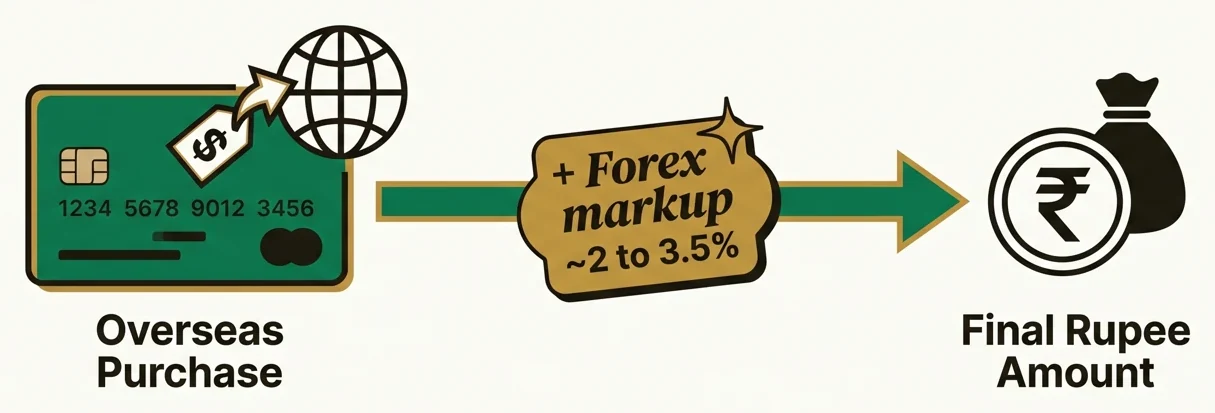
When you spend in a currency other than the rupee, your bank converts the amount and adds a foreign currency markup. This typically ranges from about 2% to 3.5% of the transaction, plus 18% GST on the markup.
It applies in two situations many people overlook:
- Spending abroad — hotels, restaurants, shopping on your trip.
- Online purchases in foreign currency — international subscriptions, overseas websites — even from home.
On a long trip, a 3.5% markup adds up fast. This is why, for frequent travellers, the forex markup often matters more than the card's reward rate.
Zero-forex and low-forex cards
A growing number of Indian cards offer a zero or reduced forex markup, aimed squarely at travellers and people who spend in foreign currencies online.
- Zero-forex cards charge no markup on international spends, saving you the full 2–3.5% every time.
- Low-forex cards charge a reduced markup (often around 1–2%) instead of the standard rate.
If you travel internationally even once or twice a year, the savings from a low- or zero-forex card can easily exceed any annual fee. Run your expected foreign spend through BestCredit's recommender (/recommend) to see whether a forex-friendly card pays for itself.
A few things to keep in mind:
- TCS (Tax Collected at Source) may apply on large foreign spends and forex card loads above an annual threshold under the Liberalised Remittance Scheme. TCS is adjustable against your income tax, so it's a cash-flow timing issue rather than a permanent cost.
- Always pay in the local currency, not rupees, when a foreign merchant offers "Dynamic Currency Conversion." Choosing rupees abroad usually means a poor conversion rate plus a fee — let your own bank do the conversion instead.
Forex cards vs credit cards
You may also see prepaid forex (travel) cards, which you load with foreign currency in advance at a locked rate. They can be useful for budgeting and avoiding markup, but a good zero-forex credit card often gives more flexibility, rewards, and protections. Many travellers carry both — a forex-friendly credit card for spending and a small cash buffer.
Airport lounge access
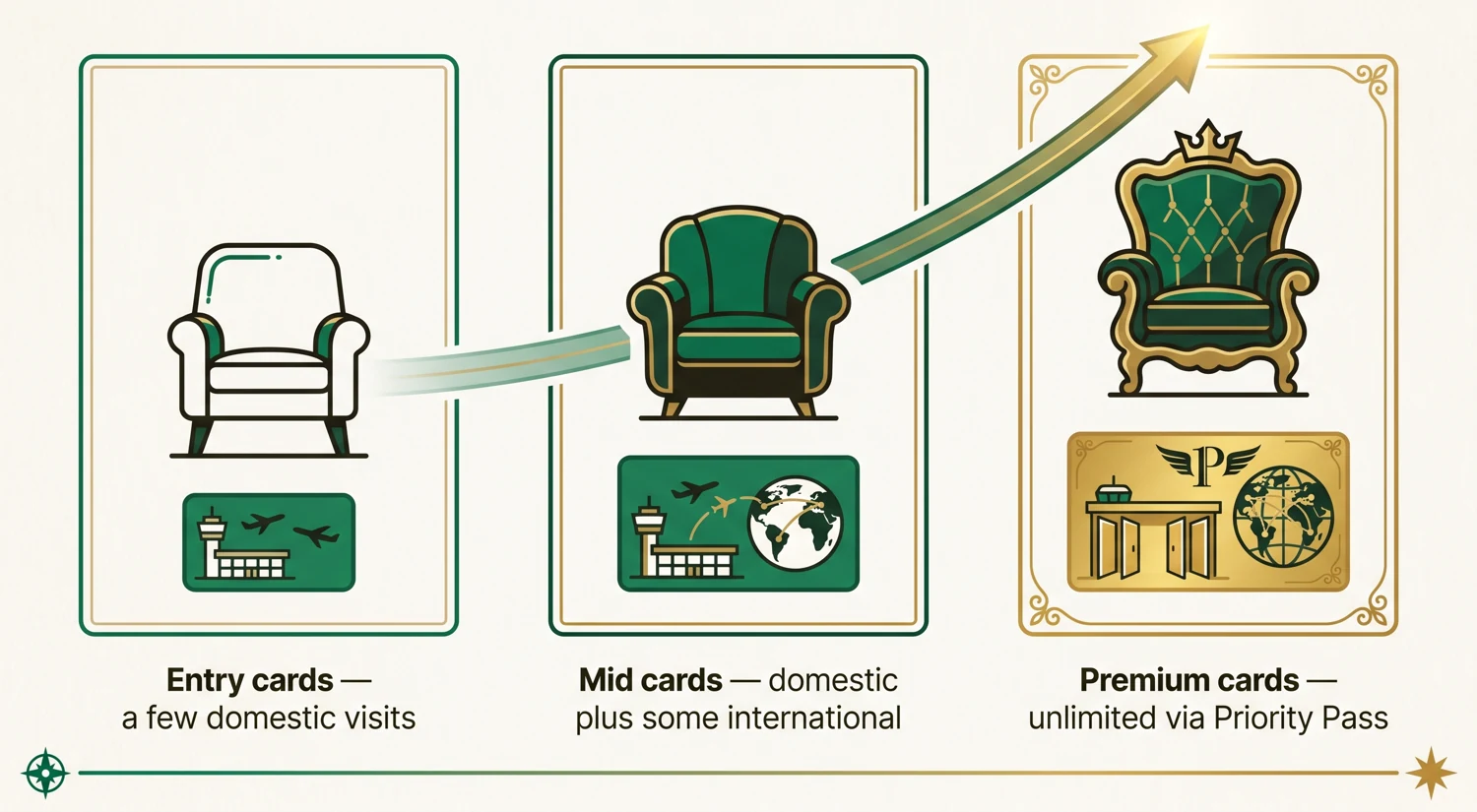
Lounge access turns layovers and early-morning flights into something pleasant — free food, drinks, Wi-Fi, and a quiet seat. Credit cards are the most common way Indians get it. Access usually comes in one of these forms:
| Type | What it covers | Watch for |
|---|---|---|
| Domestic lounge access | Lounges within India | Often capped per quarter |
| International lounge access | Lounges worldwide | Frequently via Priority Pass |
| Priority Pass membership | Global lounge network | Number of free visits varies |
| Guest visits | Bringing companions | Usually charged per guest |
Key points to check before assuming you have unlimited access:
- Caps are normal. Many cards offer a set number of complimentary visits per quarter or year, after which you pay.
- Domestic and international access are separate. A card may give generous domestic visits but limited or no international ones.
- Guest charges apply on most cards — your companions often aren't free.
- Some cards now require a minimum spend in the previous period to unlock the next quarter's free visits, so read the current terms.
Priority Pass explained
Priority Pass is a global lounge-access membership accepted at a large network of lounges worldwide. Many premium Indian travel cards include a Priority Pass, but the terms vary widely:
- The number of complimentary visits can range from a few per year to more generous allowances on top-tier cards.
- Guest visits are usually charged, often at a per-visit rate billed to your card.
- You typically have to enrol/activate the Priority Pass through your card's portal before your first use.
If international lounge access is important to you, look specifically at how many free Priority Pass visits a card includes — not just whether it "comes with" one.
Other travel-friendly features worth having
Beyond forex and lounges, useful travel perks include:
- Travel insurance — coverage for lost baggage, trip delays, or emergency medical situations (check the limits and conditions).
- No-cost or low fuel surcharge for domestic driving to the airport.
- Reward accelerators on travel spends or transfers to airline/hotel partners, which can boost value if you redeem well — see BestCredit's point-value page (/points-value).
- Wide acceptance — ensure your card runs on a network accepted at your destinations.
Don't pay a premium annual fee for perks you won't use. A card stuffed with lounge visits is wasted if you travel rarely, just as a zero-forex card is wasted if you never spend abroad.
How to choose your travel card
- Estimate your annual foreign spend. Heavy spenders should prioritise a low- or zero-forex card.
- Decide how much you value lounges — domestic only, or international/Priority Pass too — and check the visit caps.
- Add up the perks against the fee plus GST. The travel benefits should clearly beat the cost.
- Confirm acceptance and protections for where you actually travel.
The bottom line
For international travel, two numbers decide whether a card helps or hurts: its forex markup and its lounge allowance. A low- or zero-forex card can save you 2–3.5% on every foreign spend, often more than covering its annual fee, while complimentary lounge access (especially Priority Pass) makes the journey better. Always pay in local currency abroad, watch the visit caps and guest charges, and use BestCredit's recommender (/recommend) to confirm the card pays for itself based on how often — and how much — you actually travel.