BestCredit
Find card

Head-to-head

Axis Bank ACE Credit Card vs SBI Cashback Credit Card

Bill-payments cashback vs online cashback — which ₹500-class card fits your spend mix?

Axis Bank ACE Credit Card

Axis Bank

4.5
Apply →
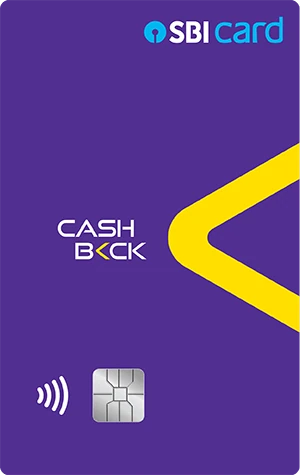
SBI Cashback Credit Card

State Bank of India

4.5
Apply →

If you apply through our link, we may earn a commission from the issuer at no extra cost to you. It never affects our ratings — how we make money.

Our verdict

On steady-state net value (rewards + milestones − annual fee), the Axis Bank ACE Credit Card wins 2 of our 3 modelled spending patterns. The SBI Cashback Credit Card takes the rest — so the right answer still depends on your mix. For a personal answer, put your real numbers into the recommender.

Both cards advertise 5%, but they point in almost opposite directions: the ACE at utility bills and food delivery, the SBI Cashback at online shopping generally. They rate the same with us, which is exactly why this matchup needs a spending-pattern answer rather than a single winner.

Net annual value, three ways

Verified reward rates and caps applied to three monthly spending patterns; milestones included, welcome bonuses excluded. Methodology

Spending patternAxis Bank ACE Credit CardSBI Cashback Credit CardBetter pick
Everyday spender₹35,000/mo₹8,681/yr₹6,561/yrAxis Bank ACE
Online-first shopper₹55,000/mo₹13,901/yr₹16,161/yrSBI Cashback Credit
Frequent traveller₹1,10,000/mo₹26,261/yr₹19,401/yrAxis Bank ACE

Side by side

Axis Bank ACE Credit CardSBI Cashback Credit Card
Joining fee₹499₹999
Annual fee₹499₹999
Fee waiverAnnual fee waived on spends of Rs.2,00,000 in the preceding yearRenewal fee of ₹999 reversed on annual spends of ₹2,00,000 or more in the preceding year
Top reward rate5%5%
Base reward rate1.5%1%
Welcome bonus value₹499
Forex markup3.5%3.5%
Lounge access1/qtr domestic
Min salaried income₹30,000/mo
Our rating4.5 / 54.5 / 5

Verified 2026-08-22 (Axis Bank) · 2026-08-14 (SBI Cashback). Confirm current terms on the issuer's site.

Axis Bank ACE Credit Card and SBI Cashback Credit Card compared side by side

Fees and waivers: ₹499 vs ₹999, same ₹2 lakh bar

The ACE charges ₹499 at joining and ₹499 a year thereafter, with the annual fee waived on spends of ₹2,00,000 in the preceding year. Its welcome benefit, worth about ₹499 in our data, broadly offsets the joining fee in year one.

The SBI Cashback charges ₹999 at joining and ₹999 a year, with the renewal fee reversed on the same ₹2,00,000 annual-spend bar. There is no welcome benefit listed in our data, so the joining fee is a real cost.

Two practical takeaways. First, ₹2,00,000 a year is roughly ₹16,700 a month — if either card is your primary card you will likely clear it without trying; as a secondary card you may not. Second, if you expect to miss the waiver, the SBI card starts each year ₹500 deeper in the hole than the ACE and has to out-earn it by that margin just to draw level. For how these renewal-fee mechanics work across issuers, see our guide to credit card fees in India.

Where does each card actually earn 5%?

Axis ACE: 5% on bills, 4% on food

The ACE's headline 5% applies to utility bill payments — electricity, gas, water, broadband and similar recurring bills, along with mobile recharges. Axis's terms have typically required these payments to be routed through Google Pay to earn the accelerated rate, which is why the card is so closely associated with the app; pay the same bill through another channel and you may earn less. Check Axis Bank's current terms for the qualifying channels before you build a routine around it.

On top of that the ACE earns 4% on dining — in practice this has centred on food delivery and partner platforms, and the partner list can change — and 1.5% on everything else.

SBI Cashback: 5% on online spends, full stop

The SBI Cashback keeps it simpler: 5% on online spends without merchant restrictions, and 1% on offline spends. Amazon, Flipkart, Myntra, travel bookings, food delivery apps — if the transaction is online and not in an excluded category, it typically earns 5%. That breadth is the card's whole pitch: you do not need to remember which platform or which app, only that the purchase happened online.

The catch sits in the exclusions. SBI Card's terms have excluded several categories from accelerated cashback — utility bills among them, along with the usual suspects such as fuel, rent, wallet loads, EMI conversions and jewellery. So the exact category where the ACE earns its best rate is one where the SBI card typically earns 1% at most. The two cards are almost perfect complements.

The caps that decide it

Every 5% card fences its headline rate with a cap, and this pair is no exception. Both banks cap accelerated cashback per statement cycle, and both have revised their rules before — SBI Card in particular trimmed its programme after the card's runaway launch. Our dataset does not carry the current cap figures, so we will not quote numbers here; check the issuer's latest terms and conditions before applying.

What we can tell you is how to think about caps:

  • Work backwards from the cap. Divide the monthly cashback cap by the accelerated rate and you get the spend level at which acceleration stops. Everything above that earns the base rate — 1.5% on the ACE, 1% on the SBI card.
  • Concentration hits caps; spread does not. A single big-ticket online purchase — a phone, a laptop, flight bookings for the family — can exhaust the SBI card's 5% cap in one transaction. Utility bills, by contrast, are naturally spread and rarely spike, which makes the ACE's cap easier to live under for most households.
  • Caps reset per statement cycle. If a large purchase is genuinely flexible, splitting it across two cycles can keep more of it inside the accelerated rate. Do not contort your finances around this, but it is worth knowing.

If your monthly online spending is well into five figures, the cap — not the headline rate — is the number that decides what you actually earn. Confirm it on sbicard.com or axisbank.com before you commit.

Offline and everyday spends: the base-rate battle

Away from the 5% categories, the ACE quietly wins. Its 1.5% base rate applies to general spends, offline included, and is among the strongest floors on any sub-₹500 card in our dataset. The SBI Cashback pays 1% on offline spends.

That 0.5% gap sounds trivial but compounds. Put ₹10,000 a month of groceries, chemist runs and in-store shopping on the card and the ACE earns ₹150 a month to the SBI card's ₹100 — a ₹600-a-year difference on offline spending alone. If your life is mostly swiped rather than clicked, the ACE is the better single card even before its bill-payment rate enters the picture.

Neither card is worth taking abroad: both carry a 3.5% forex markup, which would consume most of any cashback earned. For overseas spending, look at a dedicated low-forex card instead — our international travel guide covers the options.

Lounge access and extras

This is a short section because these are cashback cards, not lifestyle cards — but there is one real difference.

The ACE offers domestic airport lounge access — one complimentary visit per quarter in our data, so four a year. Banks have increasingly attached spend conditions to lounge programmes, so verify the current eligibility criteria with Axis before counting on it. The SBI Cashback offers no lounge access at all.

Eligibility is friendlier to document on the Axis side too: our data lists an indicative minimum income of ₹30,000 a month for the ACE, while SBI Card does not publish a figure in our dataset — approval there rests on your overall credit profile. Neither card is hard to get for a salaried applicant with a clean credit history.

Worked example: bills-heavy vs shopping-heavy months

Assume ₹20,000 a month of card spending — ₹2,40,000 a year, so both cards clear their ₹2,00,000 fee waiver and the comparison is purely about earn rates. We count food delivery at the ACE's 4% partner rate and the SBI card's 5% online rate, and utility bills at 1% on the SBI card given its typical exclusions. Caps could trim these numbers at higher volumes.

Case 1: the bills-heavy household

₹6,000 utilities, ₹3,000 food delivery and dining, ₹4,000 online shopping, ₹7,000 offline and everything else.

CardUtilities (₹6,000)Food (₹3,000)Online (₹4,000)Other (₹7,000)MonthlyAnnual
Axis ACE5% = ₹3004% = ₹1201.5% = ₹601.5% = ₹105₹585₹7,020
SBI Cashback1% = ₹605% = ₹1505% = ₹2001% = ₹70₹480₹5,760

The ACE earns ₹1,260 more a year — an effective 2.9% on total spend against 2.4%.

Case 2: the online shopper

₹2,000 utilities, ₹2,000 food delivery, ₹10,000 online shopping, ₹6,000 offline and everything else.

CardUtilities (₹2,000)Food (₹2,000)Online (₹10,000)Other (₹6,000)MonthlyAnnual
Axis ACE5% = ₹1004% = ₹801.5% = ₹1501.5% = ₹90₹420₹5,040
SBI Cashback1% = ₹205% = ₹1005% = ₹5001% = ₹60₹680₹8,160

Here the SBI Cashback earns ₹3,120 more — 3.4% effective against 2.1%.

Same two cards, same total spend, opposite winners. The swing category is online shopping: every ₹1,000 that moves from offline or bills into online purchases is worth ₹50 on the SBI card and at most ₹15 on the ACE. Run your own split in our comparison tool.

Who should carry which card

Carry the Axis ACE if:

  • Utility bills, recharges and food delivery are your biggest card categories — the 5% and 4% rates are built for exactly that pattern.
  • A meaningful share of your spending is offline; the 1.5% floor beats the SBI card's 1% everywhere the 5% rates do not apply.
  • You want the cheaper card: lower fee, a welcome benefit that offsets the joining cost, and quarterly domestic lounge visits as a bonus.
  • You are comfortable routing bill payments through Google Pay to capture the accelerated rate.

Carry the SBI Cashback if:

  • Your spending is genuinely online-first — marketplaces, fashion, travel bookings, food delivery — and spread across many merchants, where a platform-specific card would keep missing.
  • You want zero mental overhead: online means 5%, offline means 1%, done.
  • You spend ₹2,00,000 a year or more, so the ₹999 fee is reversed and the card's main weakness disappears.

Carry both if your bills and your online shopping are each heavy enough to hit the accelerated rates. The combined worst case is ₹1,498 a year in fees, and both waivers sit at the same reachable ₹2,00,000 bar. Pay bills on the ACE, shop online with the SBI card, and put offline spends on the ACE's 1.5% floor. If neither profile sounds like you, our best cashback cards page ranks the wider field, including lifetime-free options.

Frequently asked

Is the Axis Bank ACE Credit Card better than the SBI Cashback Credit Card?

For most of the spending patterns we model, the Axis Bank ACE Credit Card comes out ahead on net annual value (rewards minus fees). The SBI Cashback Credit Card still wins for some profiles — check the persona table for the pattern closest to yours.

Which card has the lower annual fee?

Axis Bank ACE Credit Card has the lower annual fee (₹499 vs ₹999), before any waiver conditions.

Can I hold both cards?

Yes — banks assess each application independently, and pairing complementary cards is a common strategy. Mind the combined fees, your credit utilisation, and space out applications so multiple hard enquiries don't dent your score.

How is the net value calculated?

We apply each card's verified reward rates and caps to a monthly spend pattern, add unlocked milestone benefits, and subtract the annual fee — steady-state, excluding one-time welcome bonuses. The full formula is on our methodology page.

Does the Axis ACE only give 5% through Google Pay?

The 5% rate on utility bill payments and recharges has typically been tied to transactions made via Google Pay under Axis's terms. Paying the same bill through another channel may earn less, so confirm the qualifying channels on Axis Bank's site before applying.

Does the SBI Cashback card give 5% on utility bills?

Typically no. SBI Card's terms have excluded utility payments from accelerated cashback, along with categories like fuel, rent and wallet loads — so bills generally earn at most the 1% base rate. That gap is the single biggest reason to prefer the ACE for a bills-heavy pattern.

Which card is better for offline spending?

The Axis ACE. Its 1.5% base rate applies to general offline spends, against 1% on the SBI Cashback — worth about ₹600 a year on ₹10,000 a month of offline purchases.

Is there a cashback cap on these cards?

Yes — both banks cap accelerated cashback per statement cycle, and both have revised their programmes before. We do not carry the current cap figures in our dataset, so check the latest terms on axisbank.com and sbicard.com, especially if you plan big-ticket online purchases.

More head-to-heads

All head-to-head matchups →