
For most Amazon shoppers in India, the Amazon Pay ICICI Credit Card is the best choice: it is lifetime free and Prime members earn 5% back on Amazon. The SBI Cashback Card matches that 5% across all online spending, while Amex SmartEarn, HDFC Millennia and SBI SimplyCLICK suit more specific profiles.
Here is how the five contenders compare at a glance:
| Card | Amazon earn rate | Annual fee | Fee waiver | Best for |
|---|---|---|---|---|
| Amazon Pay ICICI | 5% (Prime members) | ₹0 — lifetime free | Not needed | Prime members who mostly shop on Amazon |
| SBI Cashback | 5% (all online spends) | ₹999 | Spend ₹2,00,000/year | Shoppers who split spend across platforms |
| Amex SmartEarn | 5% (as bonus points) | ₹495 | Spend ₹40,000/year | Moderate spenders who want Amex offers |
| HDFC Millennia | 5% (partner brands) | ₹1,000 | Spend ₹1,00,000/year | An all-rounder with a lounge benefit |
| SBI SimplyCLICK | 2.5% (online partners) | ₹499 | Spend ₹1,00,000/year | A low-fee first online-shopping card |
How we picked the top cards for Amazon spending
Rates and fees in this article use our issuer-source card records, with outstanding limits noted on each card — the same data that powers our cashback rankings and our recommendation tool, which works out the net annual value of each card for your monthly spending profile and the stated assumptions. We judged the cards on three things: the effective earn rate on Amazon, the annual fee after realistic waivers, and how restrictive the fine print is. Headline percentages are easy to advertise; what you actually keep after fees and caps is what matters.
One card that often surprises people by its absence from this list is the Flipkart Axis Bank Credit Card. It also earns 5% online — but on Flipkart, not Amazon, where it earns far less. Co-branded cards reward loyalty to their own platform, which is exactly why Amazon shoppers need a list of their own.
Why is the Amazon Pay ICICI the default choice for Prime members?
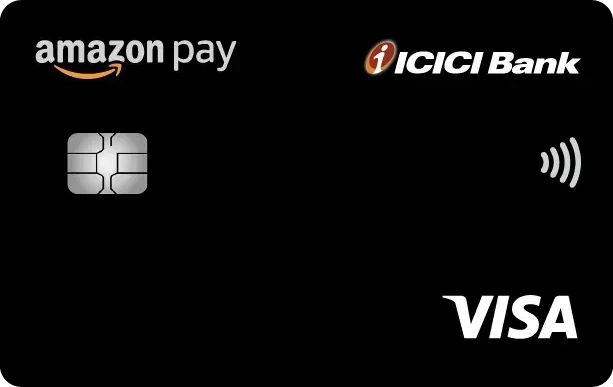
The Amazon Pay ICICI Credit Card is the simplest recommendation in Indian credit cards. There is no joining fee and no annual fee — it is lifetime free — so there is no waiver target to chase and no year in which the card can cost you money. Prime members earn 5% back on Amazon purchases, with 2% on the card's second earning tier and 1% on everything else. Non-Prime members earn a reduced rate on Amazon, so the card's headline value assumes you already pay for Prime.
The maths is straightforward. Suppose you spend ₹6,000 a month on Amazon as a Prime member:
- Annual Amazon spend: ₹6,000 × 12 = ₹72,000
- Cashback at 5%: ₹72,000 × 0.05 = ₹3,600
- Annual fee: ₹0
- Net value: ₹3,600 a year, with zero effort
Two more points in its favour. The stated minimum income requirement is modest at ₹20,000 a month, making it one of the more accessible cards on this list. And its foreign-currency markup of 1.99% is unusually low for an entry-level card — irrelevant for Amazon India, but a pleasant bonus if you occasionally shop on international sites.
The main caveat: rewards are typically credited as Amazon Pay balance rather than as a statement credit, which keeps the value inside the Amazon ecosystem. If you shop on Amazon regularly, that is no real constraint. If you might stop, a statement-credit card travels better.
SBI Cashback: 5% back without a platform lock-in
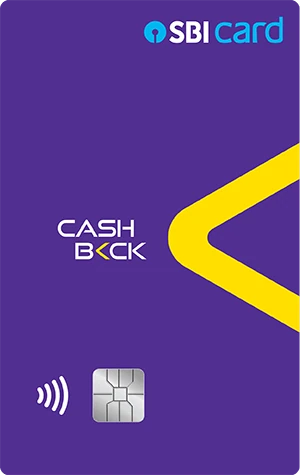
The SBI Cashback Credit Card earns 5% on online spends generally — Amazon, Flipkart, Myntra, Swiggy, your travel bookings — and 1% on offline spends. That breadth is its whole pitch: you get Amazon-grade rewards without marrying the platform, and the cashback lands against your card statement rather than as platform balance.
The trade-off is the fee. It costs ₹999 a year, and the renewal fee is reversed only if you spend ₹2,00,000 or more in the preceding year. That is about ₹16,700 a month across all your card spending — achievable if this is your primary card, less so if it only sees your Amazon orders.
Run the numbers on ₹8,000 a month of online spending (₹96,000 a year):
- Cashback at 5%: ₹96,000 × 0.05 = ₹4,800
- Annual fee if you miss the ₹2,00,000 waiver: −₹999
- Net value: ₹4,800 − ₹999 = ₹3,801
Against the same spend, the fee-free Amazon Pay ICICI nets the full ₹4,800 — but only on Amazon. The moment a meaningful slice of your online spending happens elsewhere, the SBI Cashback's uniform 5% pulls ahead. If you spend, say, ₹1,00,000 a year on Amazon and another ₹1,00,000 online elsewhere, the SBI card earns 5% on the lot (₹10,000, and the ₹2,00,000 spend also clears the fee waiver), while the Amazon-only card earns its top rate on just half of it.
Like every 5% card, it caps the accelerated cashback each month and excludes certain categories from earning — check SBI Card's current terms for the exact limits before you commit, because they have been revised more than once.
Amex SmartEarn and SBI SimplyCLICK: the point earners
These two earn accelerated reward points on online partner merchants rather than direct cashback. If you have not decided which side of that divide you sit on, our guide to cashback vs reward points covers the trade-offs in depth.
American Express SmartEarn
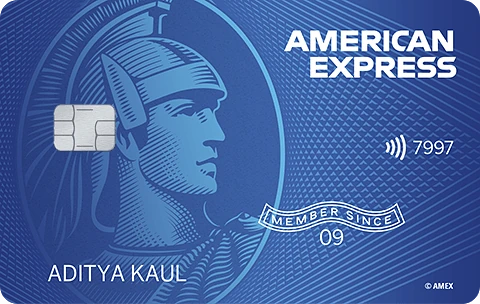
The Amex SmartEarn earns an accelerated rate worth about 5% on Amazon through bonus Membership Rewards points, 2.5% on a second tier of partner merchants, and 0.5% as its base rate. The fee is ₹495 a year, waived on spends of ₹40,000 or more in the previous card year — a threshold most Amazon regulars will clear without noticing. There is also a welcome benefit worth ₹500, and Amex's merchant-offer programme regularly adds statement-credit deals on top of the earn rate.
Three caveats. The bonus earning is capped monthly per category, so it rewards steady spending rather than one festive splurge. The stated income requirement of ₹37,500 a month (₹4.5 lakh a year) is higher than the ICICI or SBI options. And Amex acceptance, while fine on Amazon itself, remains patchier than Visa or Mastercard offline.
SBI Card SimplyCLICK
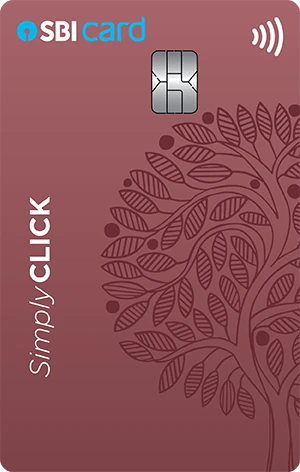
The SimplyCLICK is the budget entry: ₹499 a year, reversed on annual spends of ₹1,00,000, with a welcome benefit worth ₹500 that effectively refunds the first-year fee. It earns 10X points on partner online merchants — worth about 2.5% — with roughly 1.25% on other online spends and 0.25% offline. SBI revises the partner merchant list from time to time, so confirm Amazon's current status on SBI Card's site before applying if the accelerated rate is your main reason for the card.
At 2.5%, it earns half of what the top cards pay on Amazon. Its case is the low, easily-waived fee and easy availability — a sensible first rewards card, not a maximiser's tool.
HDFC Millennia: the all-rounder option
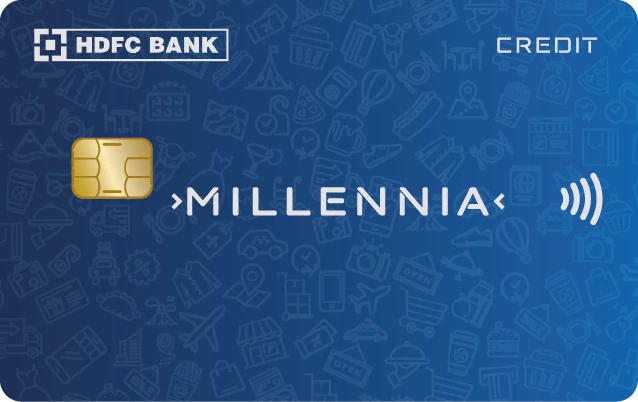
The HDFC Millennia earns 5% cashback (credited as CashPoints) on a list of partner brands that includes Amazon, and 1% on other spends. The fee is ₹1,000 a year, waived on annual spends of ₹1,00,000 — about ₹8,300 a month across the card.
What sets it apart in this company is that it is not purely a shopping card. It carries a welcome benefit of 1,000 CashPoints, worth ₹1,000 against the statement, and it can reach one domestic lounge visit a quarter — but read that benefit as HDFC writes it. Spend ₹1,00,000 or more in a calendar quarter and you choose either a ₹1,000 gift voucher or one domestic lounge access voucher for that quarter. It is one or the other, not both, so a lounge visit taken on this card costs you the ₹1,000 voucher you would otherwise have had.
Two eligibility bars, not one: the stated income requirement is ₹35,000 a month, and HDFC also publishes a maximum applicant age of 40 on this card, for salaried and self-employed applicants alike.
The honest comparison: on pure Amazon economics it does not beat the fee-free Amazon Pay ICICI. Its 5% is capped at 1,000 CashPoints per calendar month, which binds at ₹20,000 of partner-brand spend — comfortably above the ₹8,000 a month modelled below, but easy to breach in a sale month. The 1% on everything else carries its own separate 1,000-CashPoint ceiling, so the card's absolute maximum is ₹2,000 a month. Pick it for the balance, not the peak rate.
Which caps and exclusions matter during sale season?
Accelerated rates are where issuers advertise; caps are where they economise. Several cards in this list limit monthly bonus cashback or points; Amazon Pay ICICI’s ordinary reward programme is an exception, and the caps are set with normal months in mind — not a Great Indian Festival order spree. Before a big sale, three checks are worth five minutes of your time:
- The monthly cap on your card's accelerated rate. A single large purchase — a phone, a laptop, a TV — can blow through the month's bonus allowance in one transaction, with everything beyond it earning the base rate. If your card's cap is close, splitting purchases across two statement cycles (or two cards) preserves the 5%.
- EMI conversions. On many cards, converting a purchase to EMI — including no-cost EMI at checkout — forfeits the reward earning on that transaction. The interest saving usually outweighs the lost cashback on big tickets, but decide knowingly rather than discover it on your statement.
- Excluded categories. Rent, wallet loads, fuel and similar categories typically earn nothing even on cashback cards, and paying via a wallet balance rather than the card directly usually breaks the earning chain. On Amazon, pay with the card itself, not through a preloaded balance, if rewards are the goal.
None of these caps are secrets — they are in each card's terms, and our card pages track them — but sale season is precisely when shoppers exceed them without realising.
Can you stack card rewards with bank instant discounts?
Yes, and this is the highest-value trick of the festive season. During events like the Great Indian Festival — which typically runs around late September and October — Amazon partners with one or more banks to offer instant discounts on their cards. That discount applies at checkout, and your card's regular reward rate still applies to the discounted amount. Discount plus cashback, stacked.
The catch is that the featured bank changes from sale to sale and is usually announced only days before the event. Three practical rules:
- Do not apply for a card just for a sale discount. New card approvals take time, and the featured bank next sale may be different. Choose your card on year-round economics; treat sale discounts as a bonus.
- If you hold two of the cards on this list, check which one is the instant-discount card for that sale and route the big purchases through it. ICICI and SBI cards have frequently featured in past events, but verify on the sale page each time.
- Stack the rest too. Coupon toggles and exchange bonuses apply independently of the card discount, and none of them affect your card's reward earning on the final billed amount.
Which card fits which shopper?
Here is the same worked example across all five cards — ₹8,000 a month (₹96,000 a year) spent on Amazon, assuming Prime membership, headline rates before monthly caps, and no other spending on the card:
| Card | 5%/2.5% earn on ₹96,000 | Fee after waiver test | Net value |
|---|---|---|---|
| Amazon Pay ICICI | ₹4,800 | ₹0 (lifetime free) | ₹4,800 |
| Amex SmartEarn | ₹4,800 | ₹0 (₹96,000 > ₹40,000 waiver) | ₹4,800, less once caps bite |
| SBI Cashback | ₹4,800 | −₹999 (misses ₹2,00,000 waiver) | ₹3,801 |
| HDFC Millennia | ₹4,800 | −₹1,000 (just misses ₹1,00,000 waiver) | ₹3,800 |
| SBI SimplyCLICK | ₹2,400 | −₹499 (misses ₹1,00,000 waiver) | ₹1,901 |
In practice most people put other spending on the card too, which changes the waiver outcomes — the Millennia and SimplyCLICK waivers in particular sit within easy reach. As a rule of thumb:
- Prime member, Amazon-first shopper: the Amazon Pay ICICI is close to unbeatable — top rate, zero fee, no waiver arithmetic.
- Online spender across many platforms: the SBI Cashback, provided your total card spend clears ₹2,00,000 a year to kill the fee.
- Moderate, steady online spends and a taste for merchant offers: the Amex SmartEarn.
- First rewards card on a budget: the SimplyCLICK.
- One card for shopping plus the odd lounge visit: the HDFC Millennia.
If your spending does not fit neatly into one of these boxes, our recommendation tool runs the net-value maths across every card we track, using your own monthly numbers.
Frequently asked questions
Does the Amazon Pay ICICI Credit Card have an annual fee? No. It is lifetime free, with no joining fee and no annual fee, so the 5% back for Prime members comes with no fee arithmetic at all.
Do I need Amazon Prime to earn 5% on the Amazon Pay ICICI card? Yes — the full 5% rate on Amazon purchases is reserved for Prime members. Non-Prime cardholders earn a lower rate on Amazon, so factor the Prime subscription into your value calculation.
Is the SBI Cashback Card better than the Amazon Pay ICICI for Amazon? On Amazon alone, no — both earn 5%, but the ICICI card has no fee while the SBI card charges ₹999 unless you spend ₹2,00,000 a year. The SBI card wins when a large share of your online spending happens off Amazon, because its 5% applies to online spends generally.
Do purchases on no-cost EMI earn cashback? On many cards they do not — EMI conversions are commonly excluded from reward earning. Check your card's terms before converting a festive purchase, and weigh the lost cashback against the interest saving.
Which credit card is best for the Great Indian Festival sale? The card that carries that sale's instant bank discount, because the discount stacks with your regular rewards. Since the featured bank changes each sale, build your wallet around year-round value — typically one of the five cards above — and check the sale page for the discount partner before checkout.
Card details change; verify current fees, rates, caps and eligibility on the issuer's website before applying. This article is general information, not personalised financial advice.